What players say
Path Parking Puzzle offers a fresh twist on the puzzle genre by combining drawing mechanics with parking scenarios. The game is relaxing with no time limits, and each level requires careful planning. The controls are intuitive, and the difficulty ramps up nicely. It is a great choice for casual players who enjoy brain teasers.
About this game
Game Introduction
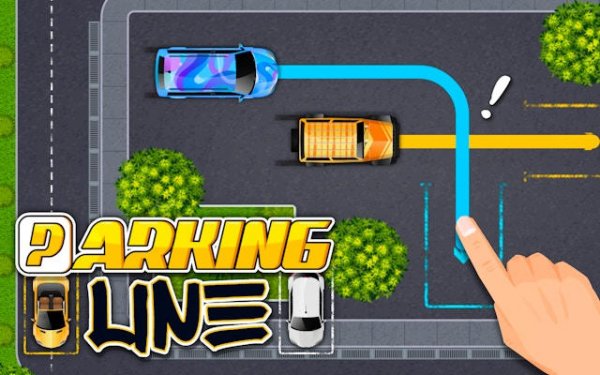
Path Parking Puzzle is a unique online puzzle game that combines parking challenges with a drawing mechanic. Instead of directly controlling the car, players sketch a path on the screen, and the vehicle follows it automatically. The core objective is to park the car safely in its designated spot while avoiding walls, other cars, and obstacles. Each level presents a new layout that tests your planning and spatial reasoning. This game transforms a routine task into a fun intellectual exercise, rewarding clever solutions and patience. With dozens of levels, it offers a pure puzzle experience that emphasizes thinking before acting, making it suitable for players of all ages.
How to Play
To play, you start by examining the parking layout and obstacles. Using your finger or mouse, draw a continuous line from the car to the parking spot. The line represents the car's path. Once you release, the car drives along the drawn route. You must account for the car's turning radius and avoid any collisions. If the car hits an obstacle or fails to park correctly, you can try again. There are no time limits, so you can think through each problem calmly. The controls are intuitive, allowing you to focus on strategy rather than complex inputs.
Game Features
Innovative drawing mechanics that turn parking into a puzzle. Dozens of challenging levels with increasing difficulty. Brain-training puzzles that enhance logic and spatial reasoning. Simple and accessible controls suitable for all ages. Clean and pleasant visuals that reduce eye strain.
Tips for Success
Take your time to study the level layout before drawing your path. Plan a smooth route that avoids sharp turns, as the car may not handle tight corners well. If you fail, analyze where the car went wrong and adjust your drawing accordingly. Practice regularly to improve your spatial awareness and drawing precision. Remember, patience is key—there is no rush, so think through each move carefully.