Steering a Slow Boat Through Busy Waters
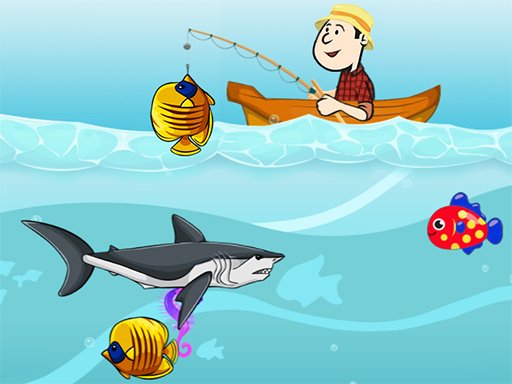
The fisherman is still learning, and his boat responds slowly. That single detail shapes every decision. You use directional controls to position the boat near fish, but you cannot dart across the sea. Each movement commits you to a path, so reading where fish are gathering matters more than reacting quickly. Sharks patrol the same water, and their presence turns a calm fishing trip into a spatial puzzle. You are not fighting them; you are routing around them.
Casting, Catching, and Using Items Wisely
A dedicated action button casts the fishing line. When a shark drifts too close, a special item pushes it away from the boat. These items are limited, so spending one early may leave you exposed later. The timer adds a second layer of pressure: every cast costs seconds, and fish that are easy to reach are often the smartest targets. Higher scores come from balancing risk, positioning, and resource use rather than frantic tapping.
How Difficulty Grows Across Levels
Each level introduces more fish and more sharks. The increase is gradual, but the effect compounds. A boat that felt manageable in early stages becomes a liability when the water is crowded. You must plan routes, decide when to ignore a distant fish, and accept that not every catch is worth the detour. Patience and quick thinking matter equally, which is unusual for an arcade game built around a timer.
Who This Game Suits
There is no violence or frightening content. The challenge comes from timing, movement, and resource management. Kids can play alongside adults because the controls are minimal and the rules are explained through play rather than text. If you want a low-pressure arcade game that still asks you to think ahead, this one fits that gap. If you prefer fast reflexes and constant action, the slow boat may test your patience.










Comments
0 comments