Class Choice Sets the Path
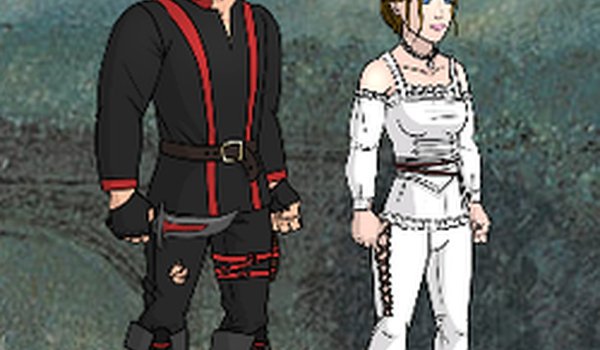
Before the story begins, players select a class that defines their hero's abilities and the way challenges are approached. This is not a cosmetic pick: the class influences how tasks are completed and how the narrative branches, so two players choosing differently will experience the same story through distinct lenses. That design encourages replaying the campaign to see how alternate roles handle identical situations.
Turn-Based Strategy Without Reflex Pressure
Combat and key story interactions run on a turn-based system. Players have time to weigh options before committing to an action, which suits a narrative-driven structure where careful thinking matters more than fast clicking. Because the game is mouse-only, navigation and selection stay simple, keeping attention on tactical choices rather than control complexity.
Voiced Story and Adaptive Soundtrack
Major story beats are delivered through voice acting, and the soundtrack shifts to match the mood of each scene. Quieter character moments and dramatic turns are distinguished by audio cues, which is why headphones or external speakers are recommended to catch subtler vocal performances. The audio design carries much of the storytelling weight alongside the text.
Leveling and Specialty Decisions
Completing objectives earns experience points that feed into a leveling system. At certain milestones, players choose a specialty that further customizes their hero's skills. The system adds depth without overwhelming complexity, letting characters develop at a pace that fits the story rather than interrupting it with dense menus.
A Rescue Story for All Ages
The adventure avoids mature themes and graphic content, focusing on rescue and cooperation instead of violence. That makes it suitable for younger players while still offering adults strategic decisions and voice acting worth paying attention to. Parents looking for a story-driven game with no objectionable material will find the tone consistent throughout.








Comments
0 comments