
Piecing Together a Rotating Cube
3D Cube Jigsaw: Puppy Puzzles takes the familiar jigsaw format and wraps it around a six-sided cube. Each face holds scattered puzzle pieces that belong to a single puppy photograph. To solve it, you rotate the cube and match edges, colors, and patterns until the image is whole. Because the picture spans multiple faces, you cannot rely on a flat reference—you have to track how pieces connect around corners and across sides. The game supports more than one valid arrangement, so experimentation is part of the process rather than a sign of failure.
Controls and Everyday Play
Rotating the cube is the central action. On a desktop, you hover over the cube, hold the left mouse button, and drag to spin it. On a phone or tablet, you tap and swipe. Both methods let you inspect every angle before placing or adjusting pieces. There is no timer and no score, which changes how you approach the puzzle: you can pause, rotate repeatedly, and reconsider placements without penalty. The lack of pressure also makes it easy to play in short sessions or return to a half-finished cube later.
Puppy Photos and Gradual Challenge
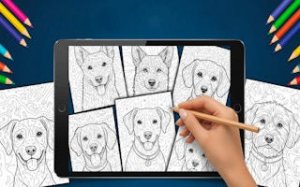
The puzzle images focus on puppies, ranging from playful poses to calmer portraits. As you complete puzzles, more complex images become available, which gradually increases the demand on your spatial reasoning. The difficulty comes from the cube geometry itself—specifically, from having to visualize how a piece on one face relates to a piece on an adjacent face. That mental rotation is the skill the game quietly exercises. The family-friendly presentation and absence of failure states make it accessible to younger players and adults looking for a low-stress activity.
Approaching a New Puzzle
Corners and edges of the cube are useful starting points because they anchor the pattern and give you reference points for nearby pieces. Before moving anything, rotate the full cube to see all six faces; a piece that seems out of place on one side often makes sense once you view the adjacent face. If you feel stuck, changing the cube's angle can reveal connections that were hidden from your previous viewpoint. Regular practice improves your ability to picture how pieces wrap around the cube, which is the core skill the game rewards.






Comments
0 comments