Core Puzzle Mechanics
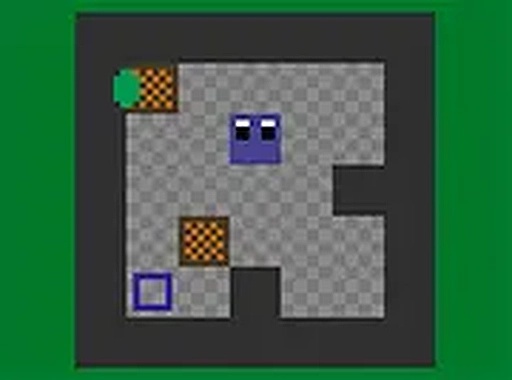
Sticky Path Logic Challenge drops you onto a grid with a single goal: move your character from the starting position to the exit. Movement is step-by-step, controlled by clicking or tapping adjacent tiles. The twist is a set of adhesive patches scattered across each board. Step onto one and your character sticks, forcing a reset unless you have planned a way to use that stickiness to your advantage. These surfaces are not just obstacles; in some layouts they let you cling to walls or cross gaps that would otherwise be impassable.
Progression and New Elements
Early puzzles teach basic movement and the behavior of sticky zones. As you advance, movable boxes enter the mix. You can push these boxes to block hazards or to build temporary bridges over sticky patches. The difficulty rises gradually, so each new idea—walls, sticky spots, boxes—gets its own set of puzzles before the game combines them. Later levels demand that you think several moves ahead, since the arrangement of these elements becomes tightly interlocked.
Strategic Use of Adhesive Surfaces
Adhesive patches serve two roles. Sometimes they are barriers that stop you cold, forcing a detour. Other times they are tools: a sticky wall can hold your character in place while you plan the next move, or a sticky floor can let you cross a gap if you approach from the right angle. Recognizing when to treat a patch as a stepping stone and when to avoid it is the central skill. Most puzzles have multiple solutions, so experimentation is encouraged.
Visual Style and Accessibility
The game uses a clean, minimal look with soft colors that keep attention on the grid. It runs in a web browser on both desktop and mobile, with no download or installation. Controls are simple: click or tap to move one step. Load times are quick, so you can start a puzzle within seconds. There are no timers, no in-app purchases, and no disruptive ads, making it easy to play in short breaks or longer sessions.








Comments
0 comments