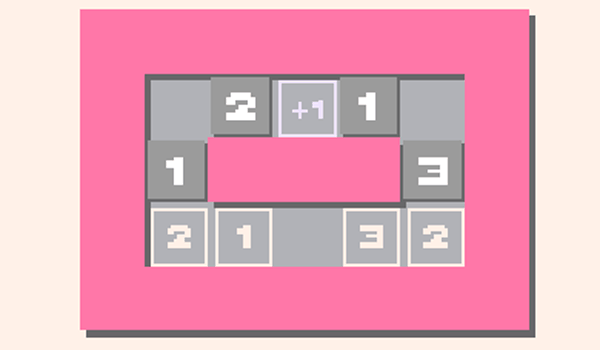
How the Group-Slide Works
Sequential Tile Shift takes the familiar sliding puzzle and changes one rule: you move an entire row or column of numbers in a single direction, not one tile at a time. That collective shift means every move rearranges multiple tiles at once, so a decision that looks helpful can block a later step. The objective stays simple — order the numbers from lowest to highest — but reaching that order demands thinking several moves ahead.
Puzzle Progression and Difficulty
Each level starts with a fresh arrangement of numbered tiles on a grid. Early puzzles use smaller grids and fewer numbers, giving newcomers room to understand the group-slide rule without frustration. As you advance, grids grow larger and starting layouts become more scrambled. The curve is gradual, so each puzzle feels like a natural next step rather than a sudden jump. No timers or score penalties exist, which lets you experiment freely and learn through trial and error.
Interface and Controls
The layout stays clean and uncluttered, with numbers shown in a clear font against a neutral background. When you shift a row or column, the game responds with immediate visual feedback, such as a smooth sliding animation, so you can see exactly how the board changed. The game works on both desktop and mobile, with touch controls that respond to swipes or drags. That simplicity suits players who want a straightforward puzzle without extra distractions.
Strategic Depth and Replay
Simple rules do not mean shallow play. Recognizing number patterns and planning move sequences that minimize backtracking becomes the real skill. Because each puzzle can be solved in more than one way, there is always room to improve efficiency. The progressive difficulty offers challenges even for experienced puzzle fans, and every level is unique, which supports replay. The calm pace makes it easy to pick up for a short break or a longer session.






Comments
0 comments